



Eric Miller

Eric Miller's picture
Staff Writer
I've been a horror fan since I was six years old when my dad gave me a book about Universal horror films. I was hooked! I'm married to the best woman in the world and I'm working on a Ph.D. in Native American history. I'm paying the bills working as a customer service representative in Chantilly, Virginia.
Posts by Eric Miller

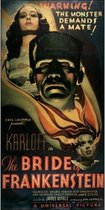
Review: Bride of Frankenstein (1935)

Bride of Frankenstein 1935 poster
Shocktober Classics 2009: Staff Screams

The central, perhaps deliberate, irony in James Whale's masterpiece The Bride of Frankenstein is that Frankenstein's creation is called the Monster.  The Monster, unforgettably played again by the great Boris Karloff, is one of the least monstrous characters in the film.  He is surrounded by people more sinister, or at least more misguided, than he, yet everyone in the film fears and loathes him, even his prospective bride.  In addition to offering chills, humor, and satire, The Bride of Frankenstein also provides a searing indictment of man's inhumanity to man.  This is just one the factors that help it become, in this author's opinion, the best horror film of the 1930s.(read more...)

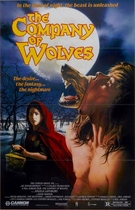
Review: The Company of Wolves (1984)

Company of Wolves poster
Shocktober Classics 2009: Staff Screams

A werewolf film like no other, The Company of Wolves is a radical reinterpretation of the story of Little Red Riding Hood through a primarily feminist viewpoint.  With it's rich and beautiful symbolism, Neil Jordan's 1984 film is based on a collection of short stories originally written by novelist Angela Carter, who collaborates with Jordan on this film's script.  While it is not terribly frightening, this film can make one marvel at its beauty and also think carefully its allegories of leaving childhood behind and embracing maturity. (read more...)

Review: The Picture of Dorian Gray (1945)

Picture of Dorian Gray poster (wide)
Shocktober Classics 2009: Staff Screams

The Picture of Dorian Gray, Albert Lewin's 1945 adaptation of Oscar Wilde's classic novel is both an entertaining and frustrating film.  It is very well made, with stylish direction, wonderful performances from much of the cast, and it tackles some serious and thought provoking themes.  Unfortunately, it takes its topic too seriously, and its main character appears throughout as not much more than a cipher.  Boredom also has a tendency to set in at times, a fatal flaw for a horror (or any other genre) film.  While worth watching, The Picture of Dorian Gray never reaches greatness.(read more...)

Review: Psycho III (1986)

Psycho III poster

After a surprisingly good sequel, Psycho II (1983), the opportunity for an additional follow up to Alfred Hitchcock's Psycho was clearly present.  Why, Norman Bates himself, Anthony Perkins, took up the director's chair for the third installment of Norman’s sad and fearsome saga!  Having been Norman for nearly thirty years (and also having worked with such legendary directors as Alfred Hitchcock, Stanley Kramer, and Orson Welles), there was probably no one better qualified to helm this installment.  While Perkins does not rise to the cinematic heights of these screen giants, he and screenwriter Charles Edward Pogue (who later penned the screenplay to David Cronenberg’s The Fly), fashion a horror experience that, while far from perfect, inspires more than its share of jumps and chills.(read more...)

Review: Taste the Blood of Dracula (1970)

Taste the Blood of Dracula poster
Reader's Choice

Taste the Blood of Dracula, the fifth installment of Hammer’s Dracula series, is a well made but unfortunately routine affair.  We have all the trappings of a good Hammer film:  a red-eyed Christopher Lee, beautiful young women falling under his spell, a great deal of blood, and an intrepid seeker of good to put a stop to the vampire.  However, in trying to expand the story of Dracula, director Peter Sasdy and screenwriter Anthony Hinds make the Count almost a guest star in his own film. While Taste the Blood of Dracula does have certain positive attributes, ultimately it is a dreary chapter in Hammer’s Dracula saga.(read more...)

Search