I was a
late bloomer in my appreciation of horror cinema. Aside from
sporadic outings to see mass-market horror films, I did not discover
the true joys of the genre until I was in college. As I journeyed
through classics like Alien,
Halloween,
and Rosemary's Baby,
I was occasionally frightened or unsettled in various ways, but it
was all enjoyable horror, the kind that can be intense but that
ultimately leaves the psyche unscarred. Then I saw The
Texas Chain Saw Massacre.
As I watched this film, a
deep-seated, almost unidentifiable anxiety began to build within me
from the opening scenes - scenes which contain very little horror.
Then, as I watched the characters experience physical and
psychological torment later in the film, that building anxiety
exploded into outright dismay. I was so disturbed by this movie that
it would be six years before I watched it again, and even then it
retained a potent effect. The
Texas Chain Saw Massacre is
not so much creative in its approach to instilling horror as it is
merciless, breaking down viewers' defenses before hitting them on
all sides with unimaginable terror. This is one of the most
horrifying films ever made.
Reading
a plot summary of The Texas
Chain Saw Massacre, one is
likely to pass it off as a generic slasher film. Five teenagers go
on a trip to a family homestead in a middle-of-nowhere town in which
someone has recently been digging up graves and forming
the bones into demented art pieces. Despite a warning or two from
the locals upon entering the town, they continue on to the house for
a short vacation. Upon arriving, however, they run out of gas. When
they find a nearby home at which they hope to find someone with
enough fuel to send them on their way, the teenagers fall one-by-one
into the hands of an in-bred family of backwoods cannibals that kill
them in some of the most brutal ways possible.
The
film's horror,
however, lies not so
much in the brutality of the killings as in the traumatizing nature
of the events surrounding those killings. At one point, a character
goes searching for his friends in the house in which, unbeknownst to
him, they have been butchered. While wandering through the house, he
unsuspectingly opens a freezer unit, only to find one of his
companions gaining a last glimpse of consciousness at the sight of
him, reaching out, and going into spasms. We don't blame him when
he slams the door shut and runs off.
One of
the heights the film reaches in its horror is the feeding of the
blood of
a character's finger
to a man so old he appears to be dead. When main character Sally
Hardesty, who has been tied to a chair at the cannibal family's
dinner table, is forced to stick her cut and bleeding finger into the
mouth of their "Grandpa" while the latter sucks weakly, the
viewer experiences a unique sense
of anxiety. One's
very understanding of humanity may be shaken by the image of a man
who is so near death that he is unlikely to be fully conscious yet so
deeply demented that he retains the desire to feed on a teenage
girl's blood. The antagonists' evil in this film is
incomprehensible.
As if
the horror is not effective enough already, The
Texas Chain Saw Massacre
also boasts, as its lead monster, one of the most visually terrifying
killers
in the genre: the man
known as Leatherface. Leatherface, with his skin masks, brutish
demeanor, enormous stature, and animalistic squealing, is so
inherently frightening that his presence nearly eclipses that of the
rest of the cannibal in-breds. The fact that this abomination of
nature is given decidedly human characteristics - the desire to
demonstrate some degree of dignity by wearing a tie, and the full
assumption of a motherly role in the family, denoted by a secondary,
makeup-covered flesh mask and wig - instills a feeling of despair
not only at the character's massive mental instability but at the
idea that such a being could come into existence. Whether we choose
to classify him as a monster or a slasher - and perhaps because
it's difficult to classify him at all - Leatherface remains one
of horror cinema's most dismaying creations.
To
disarm us in preparation for the film's brutality, Hooper and
cinematographer Daniel Pearl (in his first and best job on a feature
film) create an atmosphere that fills the viewer with dread. As
opposed to standard horror practice, the atmosphere these two create
is not, for the most part, dark and confined. It is sunny and open.
The frequent wide shots of open fields and uninhabited terrain avoid
attempting to invoke
fear at our inability to
see what may be lurking in shadows and instead utilize the fact that
there is nowhere for our characters to find refuge. The sense of
heat created by the use of red and yellow hues coupled with blinding
shots of the sun discomforts us. We are made to feel the characters'
sweltering environment and therefore to long for a place of respite,
which cannot be found. We are in a place in which there is the
chance neither to hide nor to escape. It is not but for a portion of
the film's final act that a dark, blue nighttime setting comes into
play. When it is used, it is not to hide Leatherface in the woods
for him to pop out. We always know he is right behind us. Instead,
it is used for its oppressive gloomy effect, further suppressing any
hope that there can be a positive outcome. The film is just as
interested in creating general distress as it is in
evoking horror.
If,
after being exposed to the cinematographic techniques of Hooper and
Pearl, viewers retain any layers of defense against the horror on
screen, the sounds of the film will strip those remaining defenses
away. From its opening scene, in which we hear the sick whining of a
camera flash repeat itself, the film
uses sound to perpetuate
unease. During the first act, in which the characters remain
generally care-free, the occasional shots of the sun are accompanied
by a high-pitched, searing sound. When the killing begins, we are
subject to the near constant growl of Leatherface's chainsaw and
the screams of the characters. The effect is grating, and the
auditory discomfort is so prolonged that it becomes psychologically
exhausting. One could simply listen
to this film in
its entirety and still come out unsettled.
And yet,
though the film's primary goal is to instill horror as deeply and
effectively as possible, that is not its only goal. Beneath the
screaming and murder of The
Texas Chain Saw Massacre is
a story of willfully ignorant optimists being bludgeoned by reality.
As hippies, the film's main characters see the world as a peaceful,
orderly place. Everything works according to the clockwork of the
cosmos, they believe, as evidenced
by their faith in
astrology. They refuse to acknowledge that ugliness and evil exist
beneath the world's semblance of order and peace. They pick up
hitchhikers and enter strange houses freely, as if the world has no
dangers to offer them. Franklin, a character who lives his life in a
wheelchair, is the only one of them prepared to accept such
realities. An early exchange illustrates the characters'
respective acceptance and denial of truth. When Franklin and another
character talk gleefully about the process of slaughtering cattle and
of making headcheese,
a third character interjects, "I
like meat. Please change the subject." Save for Franklin, the
main characters' viewpoints are based on convincing themselves that
the world conforms to a certain ideal rather than accepting the fact
that it is imperfect and, in some cases, appalling.
Following
the meat theme, the characters themselves become cattle to the
backwoods family. Throughout the second half of the film, they are
plunged into the ugliness of the world, forced to experience the
reality that they once denied. Two of the characters are killed by
being bludgeoned in the head with a sledgehammer, just as Franklin
discussed slaughterhouses used to do
to cows, and one
character is hung on a meat hook to await her doom while another is
butchered. Furthermore, they enter this process by obliviously
leading each other to death, like cattle to a slaughterhouse. When
one fails to return, another goes after, lacking the sense to turn
away. This pattern repeats itself until only one is left. There is
but one character that at any point escapes the metaphorical
slaughterhouse. When the father of the cannibal family repeatedly
jabs her with a broom handle during their drive back to his house,
then, it is more than abuse. It is the prodding of an animal toward
its doom. Fittingly, the only character who dies in a style unlike
slaughterhouse cattle is Franklin, who had accepted the truth of such
things. He is killed and sliced non-systematically with a chainsaw
and never retrieved for food. The main characters in The
Texas Chain Saw Massacre
have removed themselves so far from reality that the only way to
convince them of it is to force them to experience that truth
themselves. For that reason, the events are all the more horrifying.
Back during my first viewing of The
Texas Chain Saw Massacre,
when the final scene hit and the credits rolled, it was (and still
is), the only time I had ever watched a movie and been left literally
agape, staring helplessly at a screen that had assaulted me with
horror for eighty minutes and provided no more consolation at the
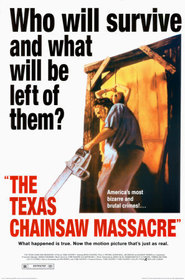
conclusion than an end to the pandemonium. The poster for The
Texas Chain Saw Massacre
reads, in emotionless black-on-white letters, "Who will survive and
what will be left of them?" I'm sure whoever came up with that
tagline was counting on its double-meaning, referring to both the
body and the mind, in the latter half of that question. But it takes
on a third meaning, too, as it is applicable to those who watch it.
This is an experience that may change you. It is horror cinema at
its purest.
Trivia:
Leatherface is very loosely based on Wisconsin serial killer Ed Gein.
That's an uncredited John Larroquette doing the opening narration.









Robert, I honestly think this
Robert,
I honestly think this is the best review I have ever read for this film... and I've read hundreds. Excellent work!
Wow, Bruce. Thanks a lot! I
Wow, Bruce. Thanks a lot! I greatly appreciate the compliment. I devoted a lot of time to this one: TCSM deserves it.
Robert, Great,
Robert,
Great, observant, review. I had the same experience of having to wait a few years before watching the film for a second time. It was just as powerful then. Tobe Hooper evokes a waking nightmare that has never been matched. Great finish to TCSM month!
Rich Dishman
Thanks, Rich. I agree. It has
Thanks, Rich. I agree. It has never been matched.
Fantastic review Robert! You
Fantastic review Robert! You pointed out some aspects that I had nevet thought of, and I must have seen TCSM at least 10 times :-)! Excellent work.
To awaken thrilling horror!
Thanks, Eric!
Thanks, Eric!
I really prefer to watch this
I really prefer to watch this classic version of Texas Chainsaw Massacre than the recent version. This is an awesome review!avert
Maybe there's something wrong
Maybe there's something wrong with me but this film never bothered me. I saw it in a theatre back when it was reshown in the early 1980s. With the exception of when Leatherface first appears out of nowhere and gets the two kids I was never scared. I had trouble figuring out what was going on. Some of the acting was so terrible that you're hoping the killers will get them--when the guy in the wheelchair got it my audience cheered:). Only Marilyn Burns gave out an excellent performance. Also the nonstop sound of the chainsaw on the sountrack gave me a headache. I've seen it on TV a few times (uncut) since the 1980s and each time it's left me kind of cold (and not in a good way). Your review is excellent though--well-written and interesting. It's made me think maybe it's time to revisit the film. So--I can't say I agree with your opinion but it's made me want to see the film again keeping your review and points in mind.
I have heard from people who
I have heard from people who say the movie didn't bother them. I never understood how, but I know you guys are out there. Thanks for the compliment. I do think that, regardless of whether one considers it actually frightening, TCSM is still a very good film. Of course, not everyone's going to agree with that, either.
Hi, good review...seen the
Hi, good review...seen the movie many times. It's a great film but even as Tobe Hooper says there are funny bits in it as well. Like when the one guy says "look what your brother did to the door". I always laugh at that part. FYI, it's really TCM, chainsaw is one word.
@Pete - Chainsaw can be one
@Pete - Chainsaw can be one or two words. In this case, the title card on the film reads The Texas Chain Saw Massacre. All the sequels and the remake use the one word spelling, however.
"He went for a little walk! You should have seen his face!"
Thanks, Pete. Yes, I agree
Thanks, Pete. Yes, I agree with you. There is definitely humor to be found here, as macabre as it may frequently be. And as Nate mentioned, "chainsaw" is commonly spelled as a single word today; however, the title for the film does actually spell it as two words, "chain saw."
OK, I stand corrected. The
OK, I stand corrected. The original cover does use two words-chain saw. Various re-releases use the single word as well as the remakes. As far as being scared by the picture, well I first saw it on VHS as a teenager years ago. I wouldn't say I was scared as much as riveted to the screen. The opening sequence I always thought was great with the creepy radio announcement in the background. The movie was shot in 16 mm and that gave the picture a gritty, documentary feel to it. Check out the dolly camera that goes under the bench to follow the girl as she approaches the house. It's one of the great horror film shots.
Pete
As far as being riveted goes,
As far as being riveted goes, I can't argue with you at all. The film's effect, I'd say, is equally hypnotizing as it is horrifying.
HI! Texas Chainsaw Massacre
HI! Texas Chainsaw Massacre (1974) Black poster does anyone know where I can buy it? Please email web address to me at:
robbanberntsson@gmail.com
all the best / Robbo